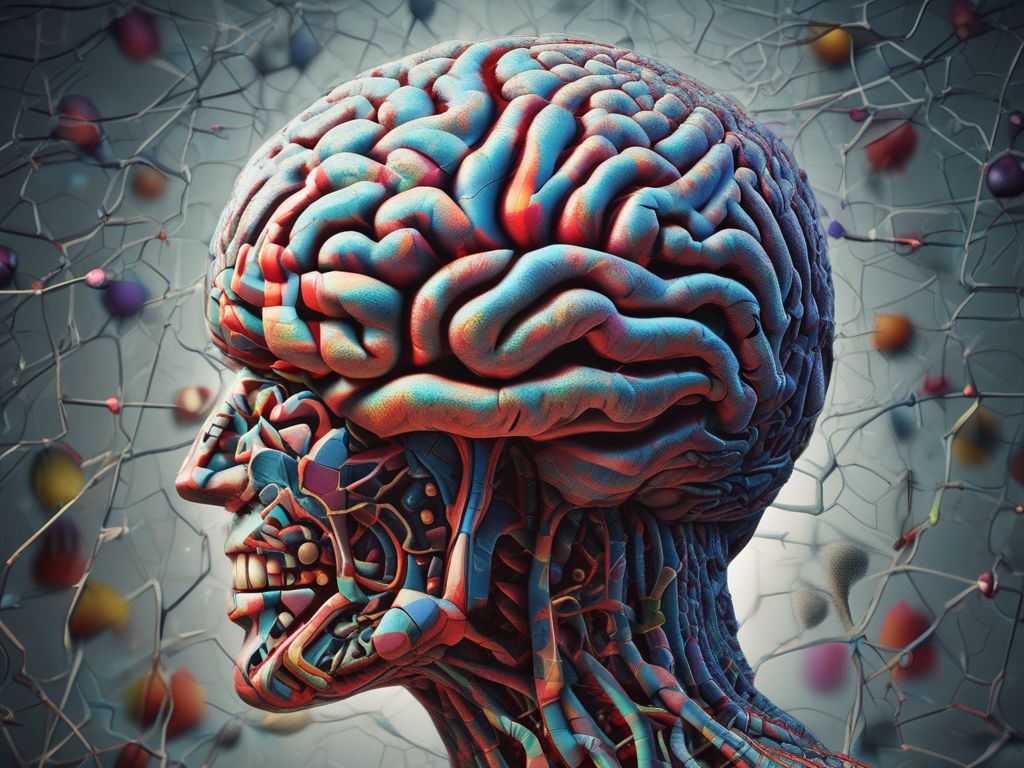
The experience of our existence is derived through our senses. The input from our senses are interpreted by our brains which builds them into our experience of life. Our brains use our impulses and dispositions (each derived from our memories, genetic coding, the momentary balances of various chemicals within our body and the structure of the brain itself) to assist with this interpretation.
As we live our lives we rarely consider the impact of those four elements on our experience – taking them as the normal order of things. Even when we question our own experience we are likely to only ever consider challenging our prima-facie interpretation of an experience without really seeking to work through the underlying parameters that have led to that particular view of the world.
If we look at each of the four we can see that the way in which they interplay – ultimately changing our experience of life. Taking control of these four aspects will derive improved interpretation of our own circumstances, helping us build a better internal story, leading to more positive actions and reactions.
Memories
Our memories are the foundations of our experience. They can be our comfort or our undoing. Our joy of life depends on our memory. Pleasure is the fleeting, in-the-moment delight that we inevitable crave. Once the moment has gone, it’s the memory of that time than can provide us with a repeated, although somewhat lesser, dose of the experience.
Memories can also be horrific. We can be blighted by the replay of traumatic experiences and it can feel like we have no control over when these memories come back into our conscious.
Our brains, looking for associations between the current circumstances and our stored memories, will define our approach to any given situation. The ability to associate the current circumstances to previous experiences has been an evolutionary necessity.
Yet we don’t manage our memories. People live through the most incredible experiences from behind a camera phone, taking videos that, if they ever do watch back, will not capture the essence of the human experience that could have been lived more fully.
We take so many photographs and videos that most of them, reminders of our happy times, never get contemplated. The devices that get in the way of our experience hold on to them as though they could be a replacement for the memories in our minds. But it is not our devices that influence our future experience.
There are techniques for undoing the non-traumatic memories that plague us (the awkward conversations, the emails from our boss, the embarrassing gaffe). For real trauma, professional assistance is often required to help those afflicted deal with the impact and process the experience.
Whatever is required, our goal should be to build a more beneficial core of memories. In doing so it will open our ability to enjoy the experiences of the future which, in turn, builds further on those positive memories that can be our resource for stored joy.
Genetic coding
We have genetic dispositions. Genetic science is relatively new and extremely complicated. A study of European ancestry samples reveal that 40% of differences in happiness were as a result of genetic differences.
Whilst that very much sounds like we are fundamentally stuck with a specific disposition or limit, what genetic scientists are also starting to see is that our behaviour can have a direct impact on the “switches” within our genetic material, which impacts on the influence of our genetic make-up.
Recent research suggests that the impact of behaviour can even impact on the genetic pre-disposition for specific life-threatening diseases – meaning that behaviour can have an impact on the the lifespan our genetics could otherwise have dictated. Exercise, sleep and diet (including fasting periods) appear to be three of the most influential aspects of behaviour that have an impact on the genetic influences.
It would be inappropriate for us to try and provide specific advise in these areas due to the level complexity and the recency of the research. One thing that appears relevant is that the identification of the behaviours that would influence an individuals genetic function would need to be defined with knowledge of individual’s genetic code. There is also a significant link to the natural chemicals our bodies produce as a results of specific behaviours. It is an area that we continue to monitor.
Chemicals
The feelings of happiness, pleasure and joy are derived from a combination of chemical balances and our mental state. Artificial stimulation to generate controlled changes in these balances and the actual override or replacement of natural chemical compounds has been a part of cultures for millennia. Modern day drugs (prescribed and recreational) take advantage of scientific research to create or control specific emotions.
The balance of serotonin, endorphins, dopamine and oxytocin are the building blocks of happiness. Although listing just four chemicals makes it sound simple, it is a complicated concoction with many other factors, including mental state, impacting on our emotional condition. The balance of these chemicals, together with many others, also has an impact on our mental state which has a direct impact on how we experience the world around us.
Apart from artificial stimulation (which generally incorporates a plethora of risks) there are other ways in which we can alter our chemical balance and adjust our emotional state. Sleep, diet and exercise all impact on the behaviours of the glands that secrete specific chemicals, as does exposure to natural light, being in nature, stress levels and even what we watch/hear/scroll through.
Just a final word in this section on dopamine. In their book of the same title, Daniel Lieberman and Michael Long, call dopamine The Molecule of More. Dopamine is the chemical that pushes us to want to do what we think will give us pleasure. We use the word “think” here but there isn’t much thinking involved. The creation and reaction to dopamine does not happen in our conscious minds. Dopamine has kept our species alive for millennia. It drives love, sex and creativity. It is also the chemical which drives less than favourable behaviours, including the doom-scrolling to which many of us lose hours of our lives.
The filter that we apply to our day to day lives following a dopamine driven period of scrolling through the jealousy/guilt see-saw of social media is often dysfunctional. We are not consciously aware of the change in perspective to own circumstances that we have experienced. We’re also left with the desire to get the dopamine back in our system and subconsciously look for opportunities to disengage with reality.
Brain plasticity
Brain plasticity refers to the brain’s remarkable ability to reorganize itself by forming new neural connections throughout life. This adaptability directly influences our perception of reality, as it allows the brain to respond dynamically to new experiences, injuries, and environmental changes. For example, when someone loses a sense like sight or hearing, the brain can reorganize itself to heighten the other senses, effectively altering how reality is perceived. Similarly, learning a new skill or language changes the structure and function of certain brain areas, influencing how one processes information and engages with the world.
This plasticity also affects the way we interpret and filter sensory information. The brain doesn’t passively record experiences but actively interprets them, influenced by past experiences, expectations, and even beliefs. As a result, two people may perceive the same event differently, with their brains “rewiring” based on what they have learned or encountered before. For instance, a musician might perceive a song in far greater detail than a non-musician because their brain has developed specialized pathways for processing musical patterns. Over time, plasticity can fine-tune these pathways, altering one’s subjective experience of reality.
Additionally, brain plasticity is essential in recovering from trauma or cognitive impairments, where the brain compensates for damaged regions by reallocating functions to healthy areas. This can drastically reshape an individual’s perception of reality, particularly in cases of memory loss, strokes, or emotional trauma. For example, through rehabilitation, individuals can often regain lost functions or adapt in ways that create a new sense of normalcy. Thus, brain plasticity not only shapes how we experience and interpret the world but also allows for the continual evolution of our personal reality as we encounter new challenges and environments.
Summary
Our interpretation of reality is limited to sensory input passing through the filters of our brains, which are significantly impacted by memory, genetics, chemicals and brain plasticity.
In this article we have only run through this as a concept. Each of these areas are tremendously complicated, so we do not offer specific advice – any such advice may work for one person but would not work for everyone.
Nevertheless, the impact of sleep, exercise and nutrition is profound. This trilogy for better health is espoused by nearly all doctors, scientists, philosophers, life-coaches, fitness-coaches, etc. They are aspects that can drive better health and change your outlook on life. There is a fourth aspect that we would add – “media”. By “media” we mean all of our media intake – what we read, watch, listen to and scroll through. Does it leave us with a dopamine hangover? Does it prompt recollection of happy memories? Does it generate the jealousy/guilt see-saw? Does it inspire us?
Our advice is to monitor these four aspects of your life (sleep, exercise, nutrition and media) – adjust them in ways that have a positive impact on you and your experience of the world.
Research each of the categories discussed in this article (memory, genetics, chemicals and plasticity) in a way that provides you with the most relevant and actionable advice. Be careful of generalist advice.
Through knowledge and practice we hone our improved experiences, our better responses and our optimum lives.






 Optima Vita
Leave a comment